30.06.26

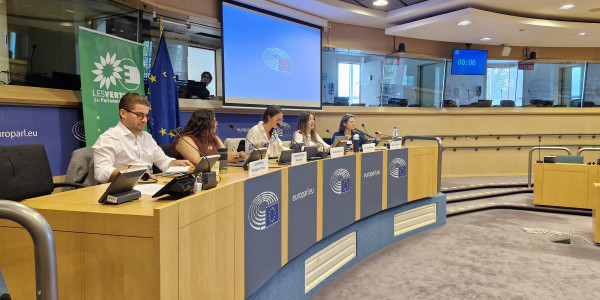
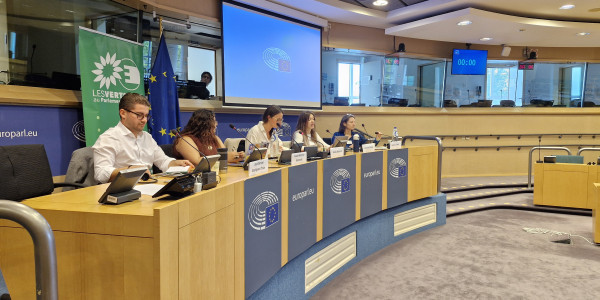
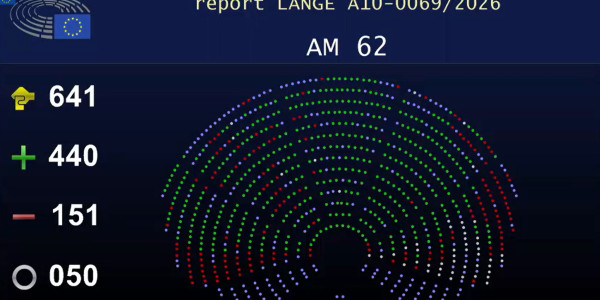
I had the pleasure to co-host with the World’s Youth for Climate Justice (WYCJ) a workshop on the EU-Mercosur Agreement ahead of the hearings at the Court of Justice of the EU that will start in July, after the adoption by the European Parliament of a resolution seeking an opinion of Court of the compatibility of this Agreement with EU Treaties.
The exchange pointed at the importance of the process initiated by the EP because while the CJEU is one of the few courts that have remained silent on the tensions between trade policy and climate obligations.
The workshop highlighted that the legal assessment of the EU–Mercosur Trade Agreement must be understood against a rapidly evolving body of international, European and inter-American climate and human rights jurisprudence.
Although the European Commission has argued that existing case law already supports the Agreement’s legality, experts stressed that the legal framework has changed significantly over the last two years. Particular emphasis was placed on the European Court of Human Rights (ECtHR) judgment in KlimaSeniorinnen v. Switzerland, which recognized a positive obligation on states to establish a fair-share carbon budget and clarified that emissions embedded in imported goods consumed domestically fall within state climate responsibilities. This ruling is especially relevant because it undermines attempts to exclude trade-related emissions from the assessment of international trade agreements.
The “Bosphorus presumption” (that is, the presumption of equivalent protection of ECHR rights by the EU, even though the EU is not a party to the ECHR) is such that EU law cannot reduce the higher environmental obligations binding on Member States where discretion remains available. Experts further referred, which confirmed that scope 3 emissions constitute indirect significant effects that must be considered in environmental assessments, reinforcing the relevance of downstream emissions generated through trade flows. Serious concerns were raised regarding the Sustainability Impact Assessment underpinning the Agreement, as it fails to account for embedded emissions, scope 3 emissions and emissions from maritime and aviation transport. The European Commission itself acknowledged that its trade impact assessment methodology is based on tariffs and non-tariffs measures and does not take into account of the whole range of trade emissions. “This leaves a blind spot when compared to the WTO’s own account of what trade-climate analysis requires, namely attention to production, transport, embodied emissions from foreign inputs, and supply-chain hotspots. It neglects offshored, embodied, and freight emissions, which should be considered similar to what is described as value-chain or scope 3 emissions.” (in Christina Eckes, “Trade and Climate Through an Institutional Lens: The Case of the EU-Mercosur Agreement”, forthcoming). As a result, the climate impacts of the Agreement have likely been significantly underestimated.
The workshop also examined the 2025 advisory opinion of the International Court of Justice (ICJ), which clarified that states are legally required to prevent transboundary environmental harm, apply the precautionary principle, regulate private actors and cooperate internationally on climate action. The proponents of the Agreement usually highlight the “Paris Agreement as an essential clause” to alleviate concerns and argue that the Parties have the obligation to implement it in good faith, which means to present their nationally determined contributions (NDCs). Yet, participants emphasized that this is not enough because the ICJ further stated that Nationally Determined Contributions (NCD) must align with the 1.5°C objective, reflect the highest possible ambition and be based on the best available scientific evidence and principles of equity. On 20 May 2026, the United Nations General Assembly adopted a resolution reinforcing the significance of the ICJ advisory opinion, The resolution reaffirmed climate protection as a legal obligation and established annual reviews of state implementation. Against this backdrop, experts argued that EU law, notably the precautionary principle and the environmental integration requirements contained in Articles 11, 168 and 191 TFEU, imposes stringent due diligence obligations whenever significant climate risks are foreseeable.
The third part of the discussion focused on the jurisprudence of the Inter-American Court of Human Rights (IACtHR), which, in 2025, characterized climate change as a human rights emergency requiring urgent legislative and policy responses by states. The Court has moved beyond a simple obligation to prevent environmental damage and now requires states to avoid foreseeable human rights harms linked to environmental degradation. The IACtHR has also reaffirmed the rights of Indigenous Peoples to self-determination and to free, prior and informed consent (FPIC) before measures affecting their lands or natural resources are adopted. These principles are directly relevant to the EU–Mercosur Agreement because increased investment and trade flows could accelerate extraction activities, large-scale deforestation and agricultural expansion (cattle ranching and soybean production) in Indigenous territories while not adequately safeguarding the free prior informed consent (FPIC) requirements. On this ground, the Agreement may be incompatible with the obligations identified by the IACtHR.
Concerns were further expressed that the new rebalancing mechanism integrated in the chapter on dispute settlement could discourage Mercosur countries from adopting ambitious climate and environmental measures (as required by the IACtHR advisory opinion) because they would face the risk of costly trade disputes. Short-term economic interests would then prevail over long-term climate objectives.
The workshop concluded with a broad consensus among participating experts that, in its current form, the EU–Mercosur Agreement raises serious compatibility concerns with the climate, biodiversity and human rights obligations binding on both the EU and Mercosur states, particularly because of inadequate safeguards, insufficient due diligence, the failure to account for embedded emissions and the limited protection afforded to Indigenous rights.